
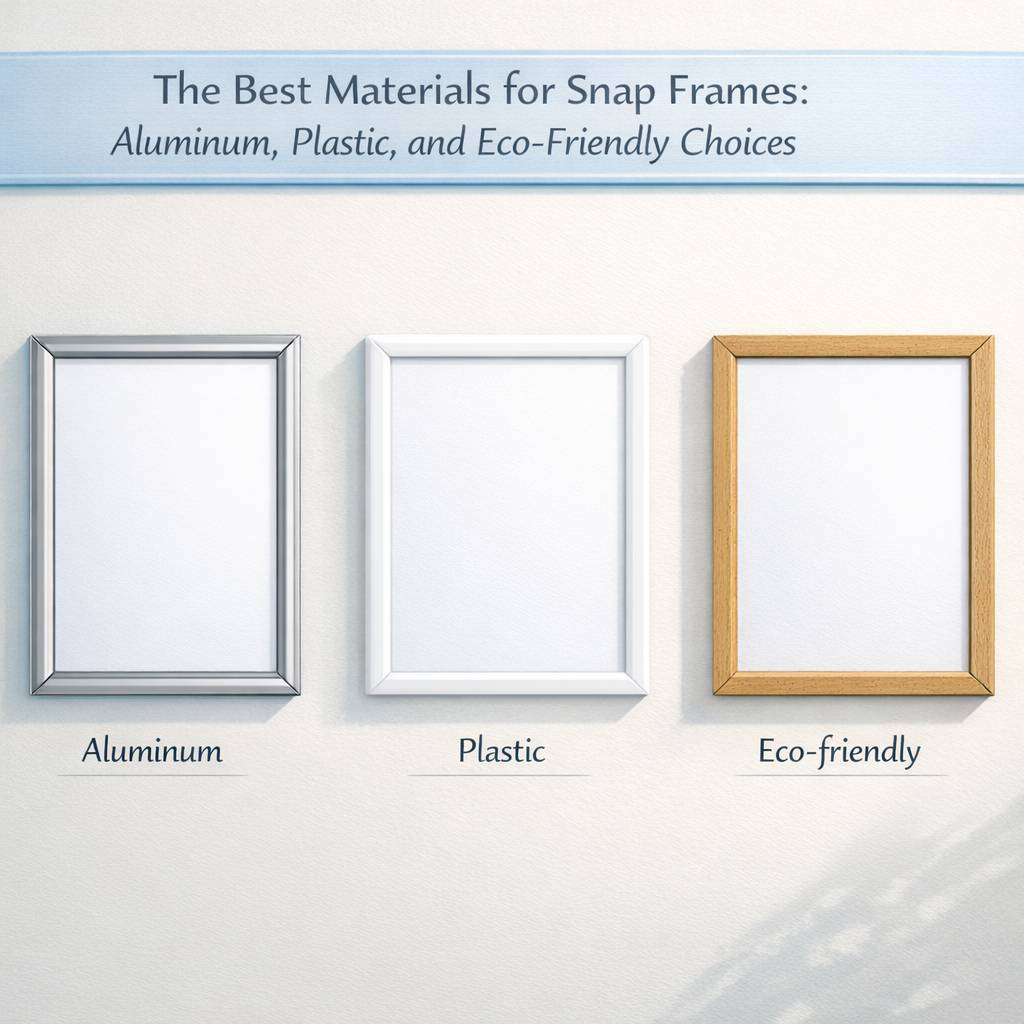
Snap frames are a staple in display solutions, offering a clean, professional way to present posters, notices, and artwork with minimal effort. When selecting a snap frame, the material matters as it influences durability, weight, aesthetics, and overall life cycle. Below, I explore the leading materials—aluminium, plastic, and eco-friendly options—evaluating their strengths, trade-offs, and ideal use cases. This guide aims to help businesses, galleries, and individuals choose snap frames that combine practicality with lasting value.
Aluminium
Aluminium snap frames are a popular choice for professional environments due to their robustness, rigidity, and modern appearance. The material’s natural strength-to-weight ratio makes aluminium frames sturdy without being excessively heavy, which is beneficial for wall mounting and freestanding displays.
- Durability and finish: Aluminium resists bending and denting more effectively than many plastics, maintaining a pristine profile even with frequent changes of poster content. The anodised or powder-coated finishes provide additional protection against scratching and corrosion, helping frames retain their luster in busy spaces.
- Aesthetics: The sleek, minimalist look of aluminium complements corporate interiors, galleries, and retail spaces. The metallic sheen can convey a premium feel, aligning with high-end signage.
- Weight and installation: While heavier than most plastics, aluminium frames are typically manageable for wall mounting and portable setups. In wall-mounted configurations, the frame’s corners and joints are designed to withstand repeated loading without warping.
- Longevity and value: Due to their durability, aluminium snap frames offer excellent long-term value. They withstand variations in temperature and humidity reasonably well, making them suitable for many indoor environments.
- Considerations: Aluminium frames can be more expensive upfront than plastic options. If the goal is cost minimisation for short-term displays, plastic might be preferable, but for frequent or long-term use, aluminium often proves more economical over time.
Plastic
Plastic snap frames, usually made from high-impact polystyrene (HIPS) or acrylic, present a versatile and economical option. They are lightweight, cost-effective, and available in a wide range of colours and sizes, making them appealing for quick-turnaround displays and locations with budget constraints.
- Weight and portability: The light weight of plastic frames makes them easy to transport and install, especially for pop-up events, classrooms, or temporary promotions.
- Cost and availability: Plastic snap frames are widely available, often at lower prices than aluminium. This accessibility makes them a practical choice for multi-site deployments or limited budgets.
- Colour and customisation: Plastic frames come in many hues, enabling branded or themed displays. They can also be moulded or finished to achieve varied cosmetic effects.
- UV resistance and finish: Some plastics can yellow or scratch more easily under prolonged sun exposure or if handled roughly. Selecting UV-stable plastics and robust surface finishes helps mitigate these issues.
- Durability and use cases: While modern plastics are tough, they are generally more susceptible to cracking under impact or heavy use compared with aluminium. They are well-suited to short- to medium-term displays, classrooms, and retail promotions where frequent replacement is not essential.
- Maintenance: Plastic frames are easy to clean with mild cleaners, but scratches can be more noticeable than on metal frames. Ensure compatibility of cleaning agents with the frame’s surface to avoid dulling or cracked edges.
Snap frames offer versatile display solutions for homes, galleries, and shops, combining simplicity with strong aesthetic appeal. Lightweight, easy to swap, and available in multiple sizes, they protect prints while keeping visuals sharp. For more options and an easy shopping experience, check out snap frames. Transform your space with stylish, practical presentations today.
Eco-Friendly Choices
Sustainability considerations are increasingly important for buyers who want to reduce environmental impact without compromising performance. Eco-friendly snap frame options focus on recycled content, recyclability, and lower embodied energy, with some manufacturers pursuing circular design principles.
- Recycled and recyclable materials: Look for frames produced from high recycled content or those designed for end-of-life recyclability. Recycled aluminium, for instance, can offer similar durability to virgin aluminium while reducing overall environmental impact.
- Biobased and low-toxicity finishes: Some eco-conscious frames employ bio-based plastics or finishes with reduced volatile organic compounds (VOCs). These choices can improve indoor air quality and reduce reliance on fossil-based plastics.
- Longevity and repairability: Eco-friendly options often pair durability with modular design, allowing parts to be replaced or upgraded rather than discarding the entire frame. This approach extends the useful life of a snap frame and lowers waste.
- Life cycle considerations: When assessing eco-friendly options, examine the full life cycle—from manufacturing emissions and material sourcing to end-of-life disposal. Some frames may be marketed as “green” but have higher embedded energy due to production processes; reading product specifications and third-party assessments is advisable.
- Use-case alignment: Eco-friendly frames are well-suited to spaces prioritising sustainability, such as environmentally conscious retail stores, educational facilities, and organisations seeking to demonstrate green practices to visitors and customers.
Choosing the Right Snap Frame for Your Needs
- Intended environment: For high-traffic areas or spaces requiring a premium aesthetic, aluminium snap frames offer durability and a refined look. In cost-sensitive or temporary contexts, plastic frames provide practical solutions without sacrificing legibility or ease of use.
- Display frequency: If posters change weekly or monthly, durability and ease of replacement become critical. Aluminium frames tend to endure frequent swaps with less risk of wear over time.
- Budget and lifecycle: Consider not just upfront costs but long-term value. A higher initial investment in aluminium can translate to lower replacement costs, while eco-friendly options may align with organisational commitments and total cost of ownership in sustainability-focused projects.
- Aesthetic goals: Choose a finish that complements interior design. Aluminium frames provide a contemporary, professional finish; plastic frames offer broader colour choices and can be tailored to brand identity.
- Commissioning context: For corporate galleries, museums, or premium retail displays, the visual integrity of the frame is vital. In classrooms or community boards, practical considerations like lightweight handling and ease of updating are often more important.
In the realm of snap frames, material choice balances durability, cost, aesthetics, and environmental impact. Aluminium remains the benchmark for professional, long-term installations, delivering strength and a timeless silhouette. Plastic frames excel where lightness, versatility, and budget are paramount, especially for short to medium-term use. Eco-friendly options offer meaningful pathways to reduce environmental footprints without compromising quality, particularly when the full life cycle is considered.
If you are deciding on snap frames for an upcoming project, evaluate the setting, turnover rate, and brand message you wish to convey. By prioritising these factors and aligning them with material characteristics, you can select snap frames that not only display your content effectively but also stand the test of time.