
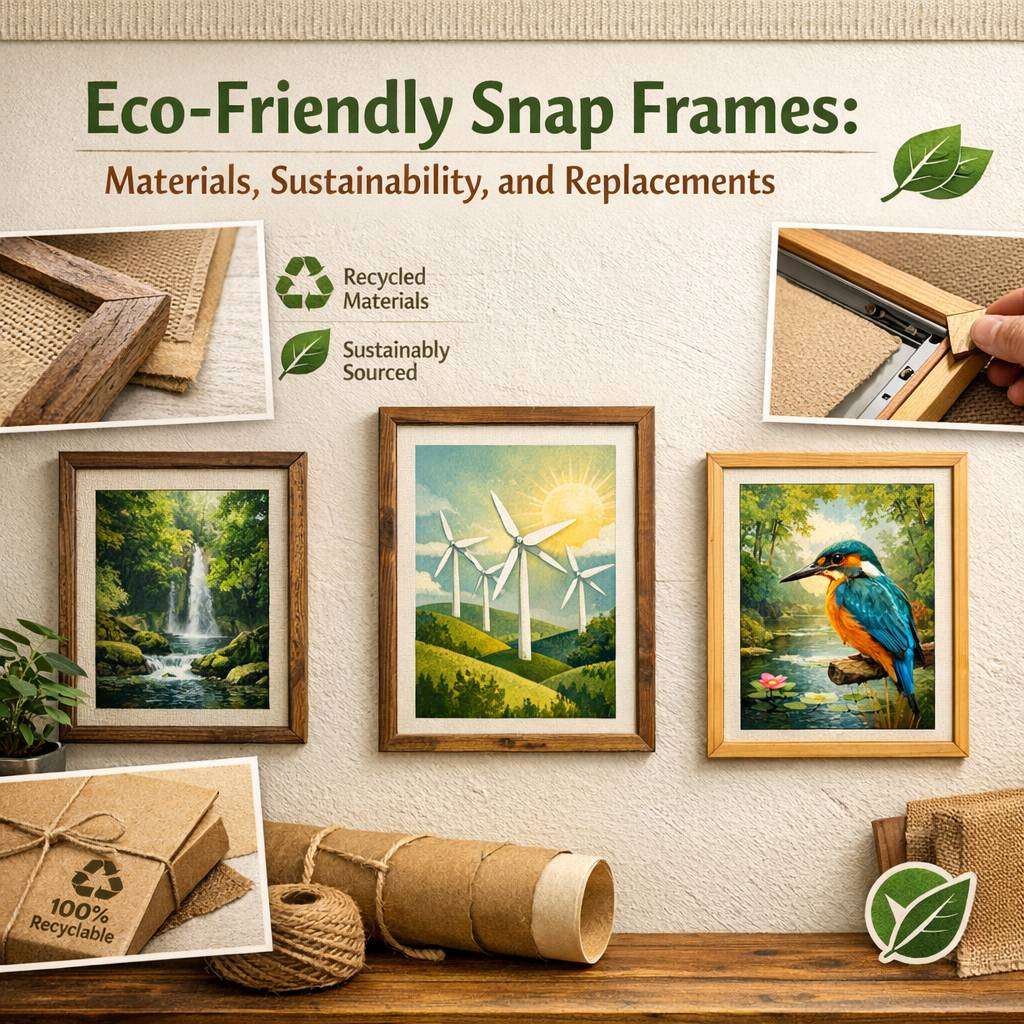
Snap frames are versatile display tools that instantly elevate any room. With a clean, professional look, they make photos, certificates, and art pop without drilling or commitment. Modern snap frames are lightweight, affordable, and easy to swap, ideal for home or office galleries. For stylish, ready-made options, check out snap frames, then explore sizes, finishes, and anti-glare features. Create curated, rotating displays that attract attention while keeping your walls tidy and organized.
In today’s world, workplaces, schools, and homes are increasingly looking for simple, stylish ways to display information and artwork without piling on waste. Snap frames have long been a convenient solution for displaying notices, posters, and photos, but the environmental impact of these frames varies. As an expert in sustainable display solutions, I’m excited to share practical guidance on eco-friendly snap frames, from materials and manufacturing to longevity and thoughtful replacements.
Materials and manufacturing choices
The core appeal of snap frames lies in their quick, tool-free changeability. Yet not all snap frames are created equal when it comes to sustainability. A well-made frame can outlive multiple posters, reducing waste and embodied energy over time. When assessing snap frames, consider these material choices and manufacturing practices:
-
Recycled and recyclable plastics: Some snap frames are made from high-density polyethylene (HDPE) or recycled polypropylenes. Look for frames that specify post-consumer recycled content. Recyclability at end-of-life is also important; frames that can be ground back into raw material help close the loop.
-
Forest stewardship and wood composites: If you prefer wood, opt for frames produced from responsibly sourced hardwood or sustainably managed softwood. Certifications such as FSC (Forest Stewardship Council) provide assurance. Composite options, like fibreboard with low formaldehyde emissions, can offer a good balance between durability and environmental impact.
-
Aluminium with low energy footprint: Aluminium frames are lightweight, durable, and highly recyclable. Seek frames manufactured with recycled aluminium to reduce energy use and mining impact. Coatings and finishes should be low-VOC (volatile organic compounds) to improve indoor air quality.
-
Non-toxic finishes and adhesives: For frames used in classrooms or healthcare settings, choose products with water-based paints, minimal plasticisers, and adhesives that avoid harmful solvents. This contributes to healthier environments and reduces emissions over the frame’s life cycle.
-
Manufacturing transparency: A growing number of brands publish life cycle information, including material origins and end-of-life options. When possible, support companies that provide recycled content declarations, repairability data, and take-back programmes.
Recycled and recyclable plastics: Some snap frames are made from high-density polyethylene (HDPE) or recycled polypropylenes. Look for frames that specify post-consumer recycled content. Recyclability at end-of-life is also important; frames that can be ground back into raw material help close the loop.
Forest stewardship and wood composites: If you prefer wood, opt for frames produced from responsibly sourced hardwood or sustainably managed softwood. Certifications such as FSC (Forest Stewardship Council) provide assurance. Composite options, like fibreboard with low formaldehyde emissions, can offer a good balance between durability and environmental impact.
Aluminium with low energy footprint: Aluminium frames are lightweight, durable, and highly recyclable. Seek frames manufactured with recycled aluminium to reduce energy use and mining impact. Coatings and finishes should be low-VOC (volatile organic compounds) to improve indoor air quality.
Non-toxic finishes and adhesives: For frames used in classrooms or healthcare settings, choose products with water-based paints, minimal plasticisers, and adhesives that avoid harmful solvents. This contributes to healthier environments and reduces emissions over the frame’s life cycle.
Manufacturing transparency: A growing number of brands publish life cycle information, including material origins and end-of-life options. When possible, support companies that provide recycled content declarations, repairability data, and take-back programmes.
Longevity, repair, and replacement decisions
A key principle of eco-friendly display design is to maximise the lifespan of each unit. Snap frames are designed for quick changes, but the longevity of both the frame and the internal sleeve is essential for sustainability.
-
Build quality and design for reuse: Choose frames with robust corner joints, secure snap mechanisms, and anti-corrosion materials. Frames that resist warping or yellowing in sunlight will endure longer, reducing the need for replacements.
-
Replace only what you need: When posters change, you want a simple swap without discarding the frame or the sleeve. Look for snap frames that support interchangeable inserts and standard sizes. A reliable system minimises waste and simplifies rotation between displays.
-
Sleeves and inserts: The inner sleeves (the inserts or posters) can be bought in bulk and replaced as needed. If the sleeves are plastic, consider options that are clear and durable, with a long service life. Replacing inserts rather than the whole frame dramatically lowers waste.
-
Repairability and spare parts: Some brands offer replacement snap tracks, corner caps, or hinges. Choosing frames with readily available spare parts encourages repair over disposal, extending the life of the product.
-
End-of-life options: A well-planned end-of-life strategy matters. Frames that can be disassembled for recycling or repurposing, or that come with take-back schemes, make the decision to replace less impactful.
Build quality and design for reuse: Choose frames with robust corner joints, secure snap mechanisms, and anti-corrosion materials. Frames that resist warping or yellowing in sunlight will endure longer, reducing the need for replacements.
Replace only what you need: When posters change, you want a simple swap without discarding the frame or the sleeve. Look for snap frames that support interchangeable inserts and standard sizes. A reliable system minimises waste and simplifies rotation between displays.
Sleeves and inserts: The inner sleeves (the inserts or posters) can be bought in bulk and replaced as needed. If the sleeves are plastic, consider options that are clear and durable, with a long service life. Replacing inserts rather than the whole frame dramatically lowers waste.
Repairability and spare parts: Some brands offer replacement snap tracks, corner caps, or hinges. Choosing frames with readily available spare parts encourages repair over disposal, extending the life of the product.
End-of-life options: A well-planned end-of-life strategy matters. Frames that can be disassembled for recycling or repurposing, or that come with take-back schemes, make the decision to replace less impactful.
Replacements and responsible stewardship
Replacements are sometimes necessary due to wear, changing branding, or updated safety and accessibility guidelines. The right approach balances practicality with sustainability.
-
Assess the true need for replacement: Before discarding a frame, evaluate whether the issue is with the insert or the frame itself. If the frame is structurally sound, a new sleeve or a fresh print may be all that’s required.
-
Re-use and repurpose: Old snap frames can be repurposed for internal notices, community boards, or local exhibitions. A clean, well-maintained frame can gain a second life in a different space rather than entering the waste stream.
-
Upcycling ideas: Consider using frames for seasonal displays, classroom projects, or art installations. With a little paint or a new finish, an existing frame can look like new while keeping resources in circulation.
-
Ethical disposal: When a frame must be replaced, opt for take-back programmes where available or recycle through certified facilities. Remove all non-recyclable components, separate metals, plastics, and paper, and follow local guidelines for recycling.
-
Sourcing smarter replacements: When you do need to buy new frames, prioritise suppliers with clear sustainability policies—recycled content, responsible sourcing, repairability, and end-of-life support. A small upfront investment in eco-friendly framing can pay off in reduced waste and ongoing cost savings.
Assess the true need for replacement: Before discarding a frame, evaluate whether the issue is with the insert or the frame itself. If the frame is structurally sound, a new sleeve or a fresh print may be all that’s required.
Re-use and repurpose: Old snap frames can be repurposed for internal notices, community boards, or local exhibitions. A clean, well-maintained frame can gain a second life in a different space rather than entering the waste stream.
Upcycling ideas: Consider using frames for seasonal displays, classroom projects, or art installations. With a little paint or a new finish, an existing frame can look like new while keeping resources in circulation.
Ethical disposal: When a frame must be replaced, opt for take-back programmes where available or recycle through certified facilities. Remove all non-recyclable components, separate metals, plastics, and paper, and follow local guidelines for recycling.
Sourcing smarter replacements: When you do need to buy new frames, prioritise suppliers with clear sustainability policies—recycled content, responsible sourcing, repairability, and end-of-life support. A small upfront investment in eco-friendly framing can pay off in reduced waste and ongoing cost savings.
The practical takeaway is simple: choose snap frames built for durability, with materials that can be recycled or reused, and adopt a mindset of repair and repurposing. By selecting frames that allow easy insert changes and component replacement, organisations can maintain fresh displays without generating unnecessary waste. In environments where displays change frequently—reception areas, schools, community centres, and galleries—this approach is particularly impactful.
If you’re updating a space, start with a quick audit of your current frames. Identify which are structurally sound and which could benefit from a simple sleeve swap. Consider replacing only those that fail the test for longevity, while seeking out frames with credible sustainability credentials for future purchases. In the long run, the combination of thoughtful material choice, repairability, and responsible disposal makes snap frames an elegant, eco-friendly solution for modern display needs.